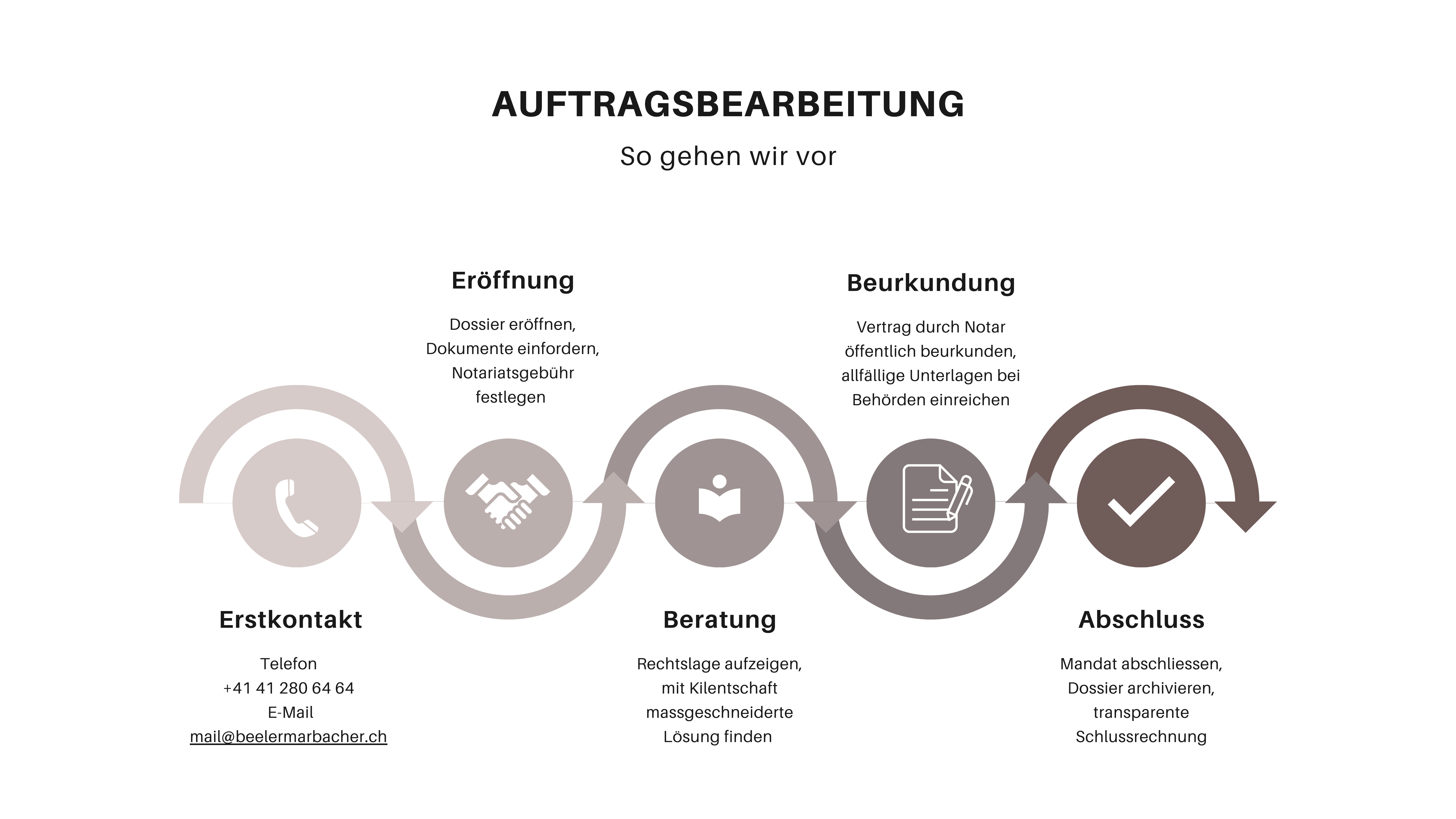
Notary for Certifications
Notary for Certifications - Beeler & Marbacher Law Office
What is the Certification of a Signature?
Through the certification of a signature, the notary confirms that the signature is authentic, i.e., that it originates from the signer.
For this purpose, the notary certifies that:
- The signature was affixed in their presence, or
- The signature has been acknowledged by the signer as their own.
In certain cases, an individual may no longer be able to sign their name. In such situations, we are pleased to certify alternative marks, such as a cross, fingerprint, or similar.
As notaries in the Canton of Lucerne with years of experience, we can certify your signature or mark professionally, swiftly, and without complication.
What is the Certification of a Copy?
The certification of a copy involves the notary attesting that the copy is an accurate and true reproduction of the original document. This applies equally to the certification of other reproductions of a document or excerpts thereof.
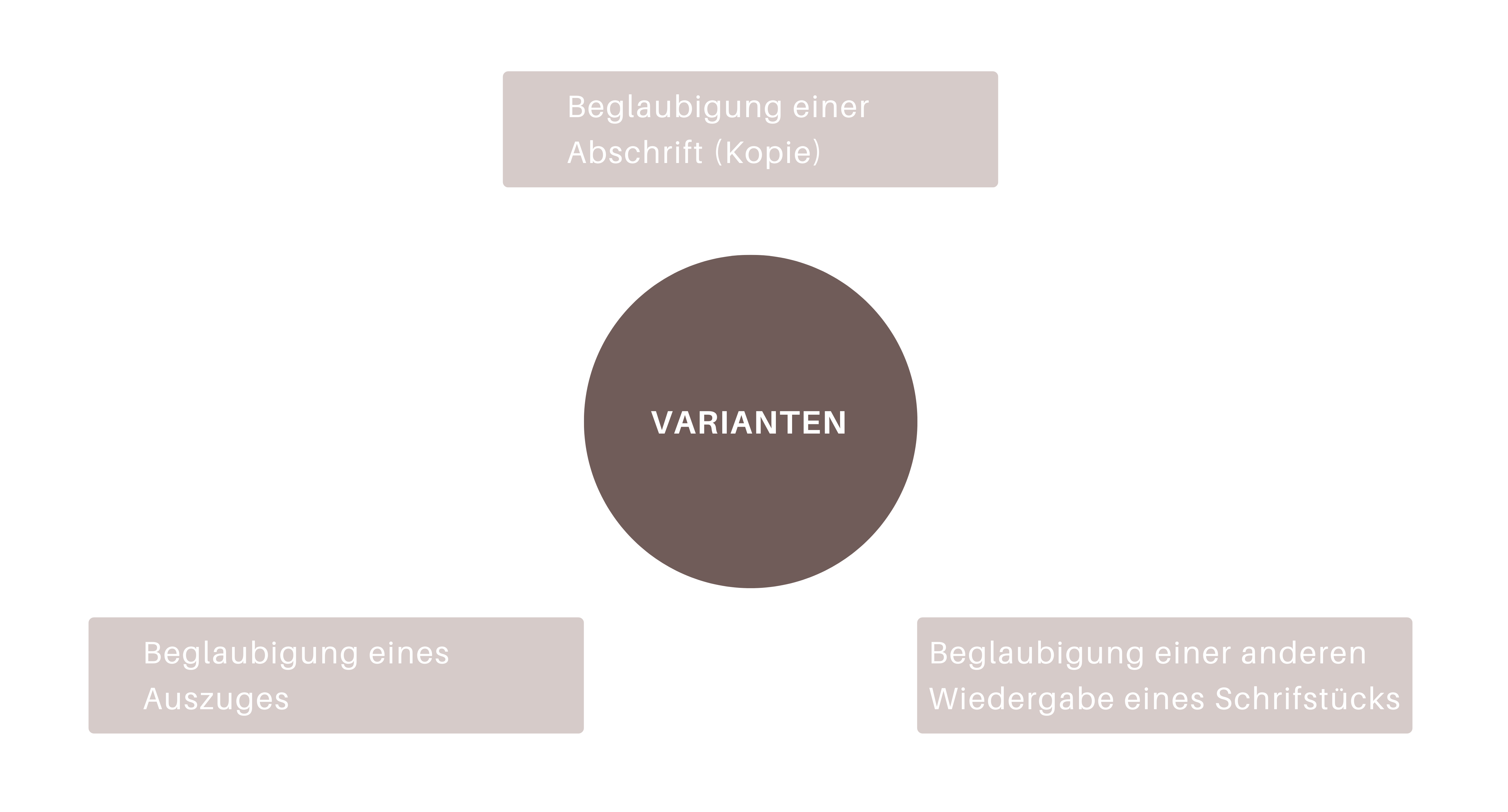
There are two main types of certifications to distinguish between:
- The notary certifies, by personally comparing the documents, that the copy matches a document presented to them.
- The notary certifies that the copy corresponds to a document they have personally prepared.
As notaries of the Canton of Lucerne, we are pleased to provide notarial certification of your copies, whether in the context of corporate matters or other areas. You can rely on our competent support.
What is the Certification of a Translation?
The certification of a document's translation consists of the notary confirming that the translation is accurate. Two approaches can be distinguished:
- The notary performs the translation themselves.
- The notary engages a translator to create the translation or review an existing one.
When a translator is involved, the notary must verify that the translator possesses the necessary qualifications.
Our notaries are well-connected in Central Switzerland and can either provide independent translation services or engage qualified translators. We are happy to assist you in this matter.
When is an Apostille Required?
If the certified document is intended for use abroad, the foreign authority typically requires not only the signature certification but also an additional certification, known as an apostille. This additional certification confirms the authenticity of the notarial certification.
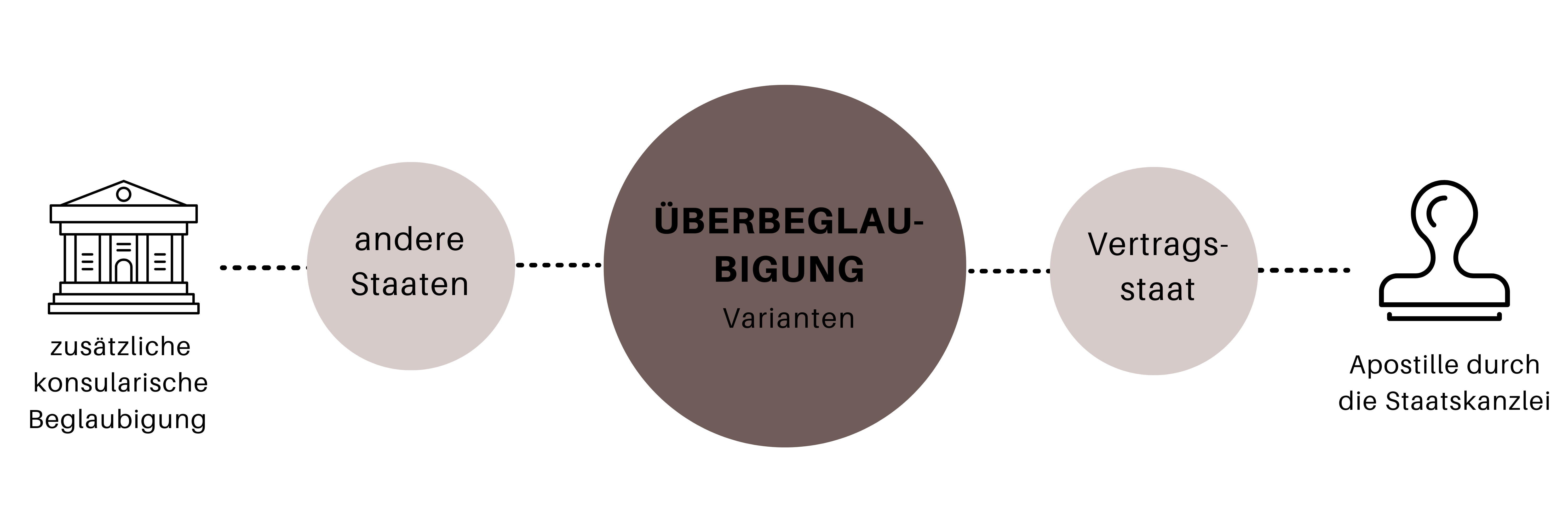
For countries that are signatories to the Hague Convention, the additional certification (apostille) is issued by the State Chancellery. This guarantees that the document will be accepted in the destination country without further certification by diplomatic or consular authorities.
For all other countries, the standard certification without an apostille applies, which requires consular authentication.
With years of professional experience, the notaries at Beeler & Marbacher are well-equipped to advise you competently on documents intended for use abroad.
Beeler & Marbacher Notary Office - Your Partner for Notarial Certifications
Beeler & Marbacher Law Firm and Notary Office is your ideal choice for notarial certifications. Are you looking for skilled and straightforward professionals for certifications? We are here for you as notaries of the Canton of Lucerne, with extensive expertise.

With us, you have a perceptive partner who:
- listens to you and quickly understands your goals and expectations,
- executes certifications swiftly and efficiently,
- fulfills all regulatory requirements on your behalf.

Do you have questions about certifications? Don’t hesitate to reach out. You can contact us:
We charge in accordance with the Notarization Fee Ordinance. A list of our prices can be accessed via the following link.